What to wear in Japan: a season-by-season guide
What to wear in Japan in every season, from humid summers to snowy winters, plus the etiquette that shapes it: shoes off indoors, onsen rules and temples.
By Manodya Madushanka · Published
Japan has four distinct seasons, and the right clothes change more from month to month than in most places travellers go. Tokyo swings from frosty winter mornings to summer days above 30°C with heavy humidity, there is a rainy season in June and July, and the north and the mountains are snowy for months. On top of the weather, a few customs shape what you wear every day: you will take your shoes off often, you bathe without clothes at onsen, and you will walk far more than you expect.
In short
- Dress for the season: Tokyo averages about 31°C at the height of summer and around 1°C on January nights.
- Pack shoes that slip on and off easily, and socks without holes: you take your shoes off at many entrances.
- Comfortable walking shoes matter more than anything else in your bag. A day of sightseeing can easily pass 15 kilometres on foot.
- Shorts and short sleeves are fine in summer. There is no national dress code for temples or shrines, but modest, tidy clothes fit in best.
- Tokyo, August
- 31°C
- Tokyo, January
- 1–10°C
- Rainy season
- Jun–Jul
- Cherry blossom
- Late Mar
Japan's weather month by month
The figures below are Tokyo's long-term averages from the Japan Meteorological Agency (1991–2020). Kyoto and Osaka are similar but a little hotter in summer. Hokkaido and the Japanese Alps are much colder, and Okinawa is subtropical, warm even in winter.
| Month | Tokyo high / low | What it's like | What to wear |
|---|---|---|---|
| January | 10°C / 1°C | Cold, dry and sunny | Warm coat, knitwear, scarf, gloves |
| February | 11°C / 2°C | Cold, dry; snow in the north | Warm coat and layers |
| March | 14°C / 5°C | Cool, warming; cherry blossom starts late in the month | Light coat or jacket over layers |
| April | 19°C / 10°C | Mild and pleasant; blossom season | Light jacket, long sleeves, a jumper for evenings |
| May | 24°C / 15°C | Warm, mostly dry | T-shirts and light trousers, a light layer |
| June | 26°C / 19°C | Rainy season begins; humid | Breathable clothes, umbrella, shoes that cope with rain |
| July | 30°C / 22°C | Rainy season ends mid-month; hot and humid | Light, loose cotton and linen, sun hat |
| August | 31°C / 24°C | Hottest and most humid month | The lightest clothes you have, sun protection |
| September | 28°C / 20°C | Still hot; typhoon season, heavy rain | Summer clothes, umbrella, a light rain jacket |
| October | 22°C / 15°C | Warm days, cooler evenings; can be wet | Long sleeves, light jacket, umbrella |
| November | 17°C / 9°C | Crisp and clear; autumn leaves | Layers and a medium jacket |
| December | 12°C / 4°C | Cold and dry | Warm coat, knitwear, scarf |
What to wear in Japan in spring
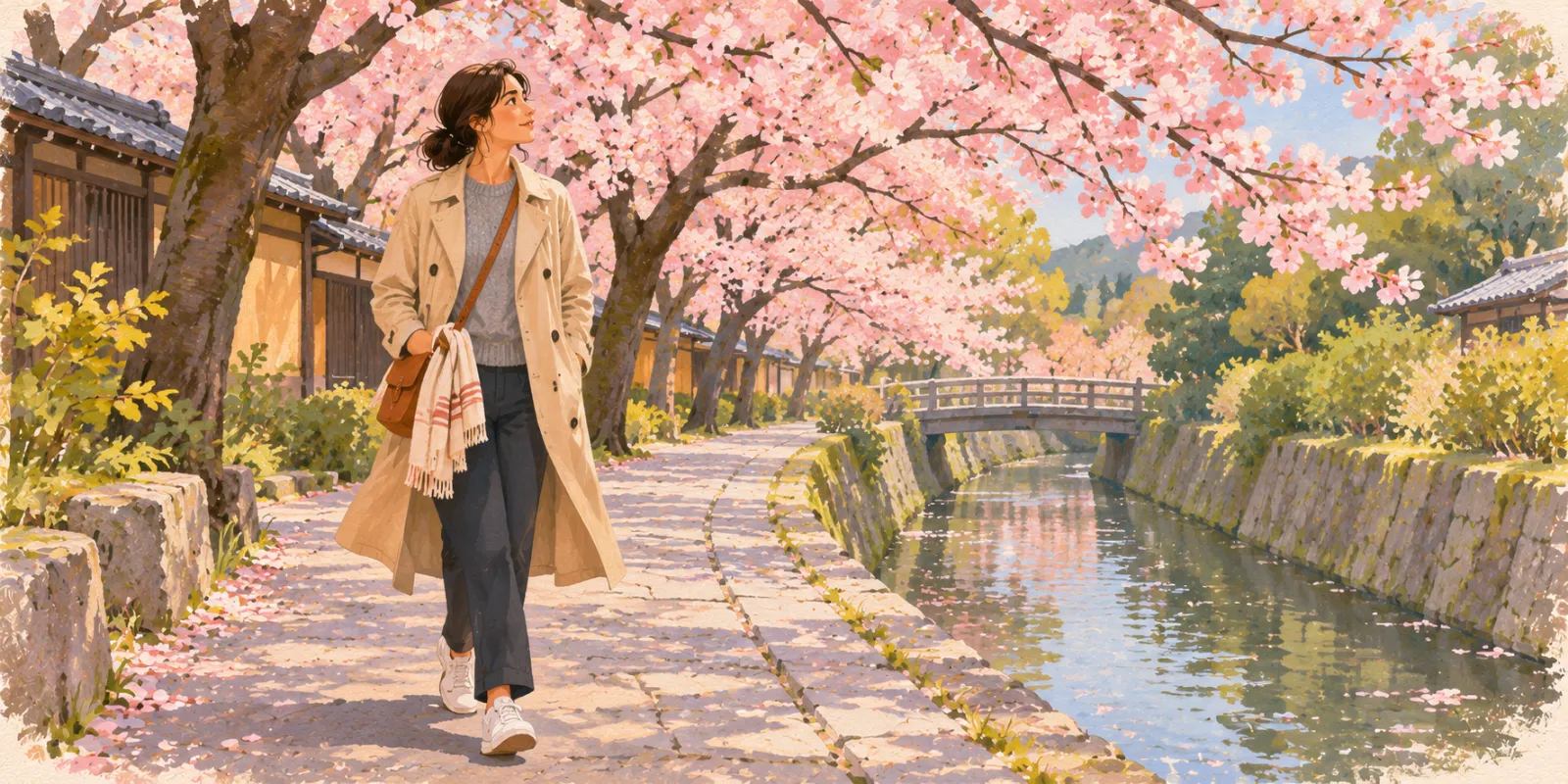
Spring runs from March to May and is the season most people picture: cherry blossom usually opens in Tokyo and Kyoto in late March, though the date moves by a week or more from year to year. Days warm quickly but mornings and evenings stay cool, especially in March and early April, so dress in layers. A light coat or trench, a jumper or cardigan and long trousers will cover most days. By May, T-shirts and light trousers are enough during the day.
What to wear in Japan in summer
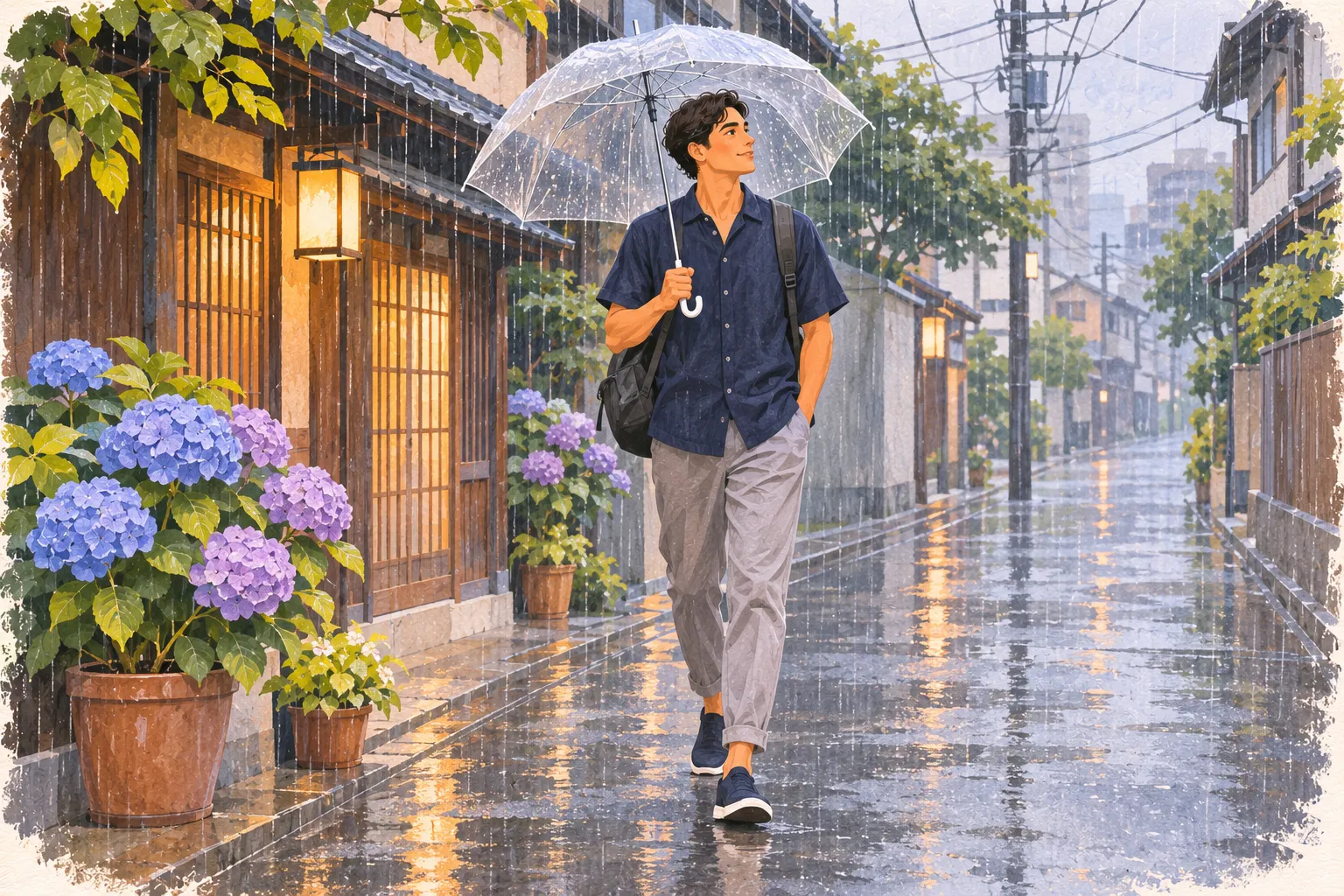
Summer starts wet. The rainy season, tsuyu, usually reaches Tokyo in early June and lasts until mid to late July, bringing grey skies, frequent rain and high humidity rather than constant downpours. Pack quick-drying clothes, a compact umbrella and shoes that do not mind getting wet. After that comes real heat: late July and August average over 30°C in Tokyo, with humidity that makes it feel hotter. Loose cotton and linen, a sun hat and a refillable water bottle are the essentials. You will see many Japanese people shading themselves with parasols and wearing light long sleeves against the sun.
What to wear in Japan in autumn
September is still summer in all but name, and it is the peak of typhoon season: Tokyo gets more rain in September and October than in any other months. Keep summer clothes, but add an umbrella and a light rain jacket. October is warm by day and pleasant in the evenings, and by November the air is crisp and the autumn leaves are at their best, so you will want layers and a medium jacket, especially in Kyoto's temple gardens in the early morning.
What to wear in Japan in winter
Winter in Tokyo is cold but usually dry and sunny, with days around 10°C and nights near freezing. A warm coat, knitwear, a scarf and gloves are enough. Hokkaido, Tohoku and the Japanese Alps are a different matter, with deep snow and temperatures well below freezing, so bring proper winter boots and thermal layers if you are heading north or skiing. Trains, shops and restaurants are well heated, so wear layers you can take off indoors rather than one very heavy jumper.
March–May
Spring
- Light coat or jacket
- Long-sleeved tops
- Long trousers
- Walking shoes
June–August
Summer
- Loose cotton or linen
- Light trousers or shorts
- Sun hat
- Umbrella for tsuyu
September–November
Autumn
- Long sleeves
- Jumper or light layer
- Rain jacket
- Walking shoes
December–February
Winter
- Warm layers
- Warm coat
- Thick socks
- Boots for snow areas
The etiquette that changes what you wear
Shoes off, often
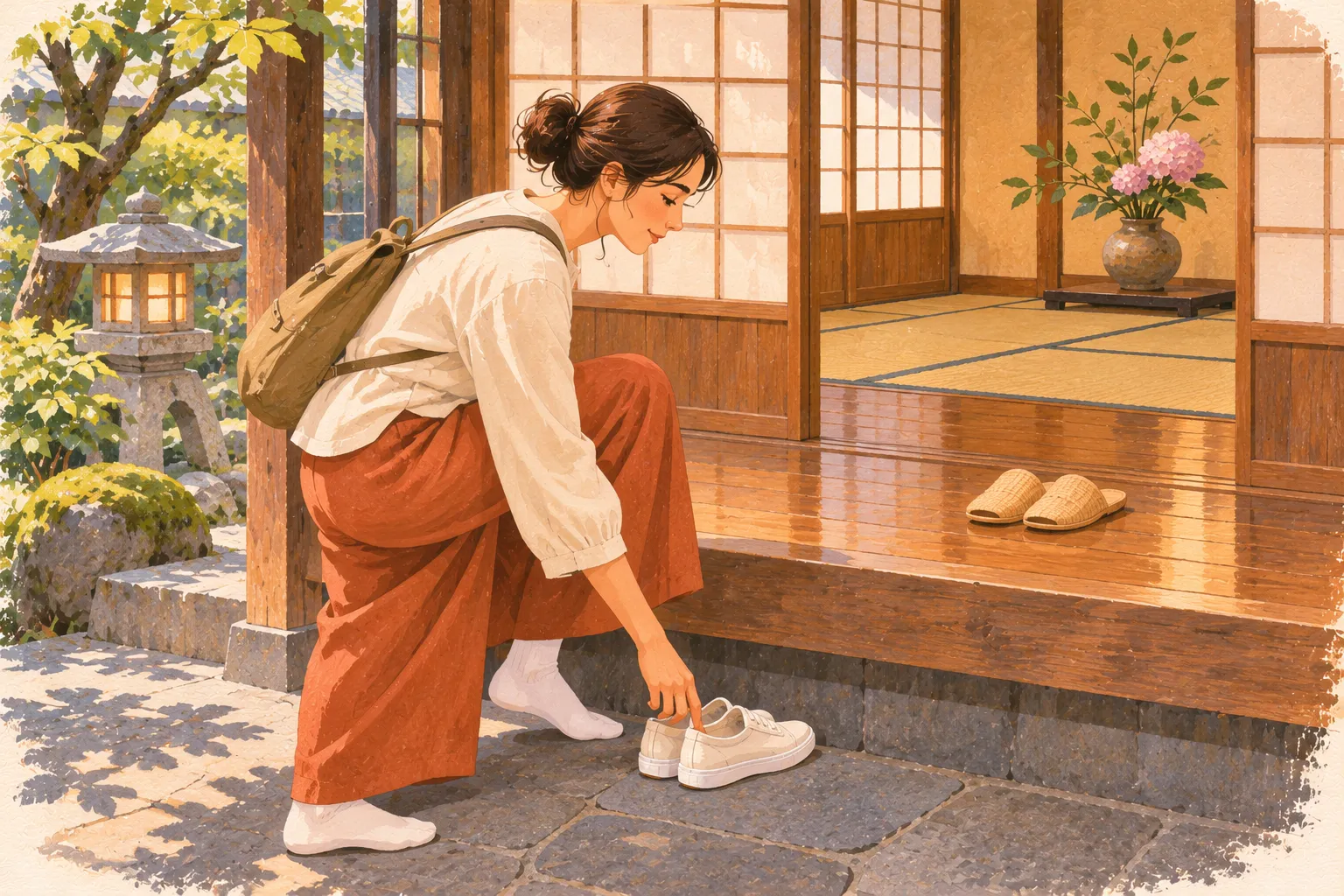
In Japan you take your shoes off at the entrance of homes, ryokan inns, many traditional restaurants and the halls of many temples, and the Japan National Tourism Organization's etiquette guide adds that slippers come off too before you step onto tatami mats. That shapes your packing more than anything else: wear shoes you can slip on and off without sitting down to unlace them, and make sure your socks are clean and free of holes, because people will see them.
Onsen and tattoos
At onsen and public baths you bathe without any clothes, and swimwear is not worn in the baths, as the JNTO etiquette guide explains. Tattoos are the bigger question: many hot springs, public baths, pools and gyms still turn away visitors with tattoos, though the JNTO onsen guide notes that more places accept them than ever. JNTO suggests covering a small tattoo with a sticker, patch or waterproof bandage and checking with the facility before you go. A private or in-room bath is the easiest option if you have larger tattoos.
Temples and shrines
Japan has no national dress code for temples and shrines, and most do not post one. Tidy, reasonably modest clothes fit in best, and a few rules are worth knowing: take your hat off inside halls, take your shoes off where you see a step up or a shoe rack, and follow any signs at the entrance, which are the rules that apply. If you book a temple stay, ask the temple what it expects you to wear.
Can you wear shorts in Japan?
Yes. Shorts are common in summer, especially in cities, and no one will stop you wearing them. Japanese adults tend to dress a little more neatly and cover up a little more than many visitors are used to, so very short shorts and beachwear stand out away from the coast. Pack one pair of light trousers or a longer skirt for temples, nicer restaurants and the overnight stays where you sit on the floor.
What to wear in Japan as a woman
There are no special rules for women. Everyday street style in Japan is polished and fairly covered at the top, with shoulders and necklines covered more often than in Europe or the US, while shorter hemlines are common. Dresses and skirts work well, but think about the floor seating in traditional restaurants and ryokan, where a longer or fuller skirt is more comfortable. Comfortable, stylish trainers are completely normal, so there is no need to suffer in heels.
Shoes for all that walking
Japan is a walking country. Between stations, temple steps and long corridors, a day of sightseeing easily passes 15 kilometres. Bring broken-in trainers or walking shoes that are also easy to slip off, plus a second pair in case one gets wet in the rain. In winter in the snowy regions, waterproof boots with grip make a real difference.
Japan packing list
- Comfortable walking shoes that slip on and off, plus a spare pair
- Socks without holes, more than you think you need
- Layers for the season: T-shirts, long-sleeved tops and a jumper
- A jacket to match the season: light in spring and autumn, warm in winter
- Light trousers or a longer skirt for temples and floor seating
- Compact umbrella, especially for June, July, September and October
- Sun hat and sun protection in summer
- Thermal layers, gloves and boots if you are going north or skiing in winter
- Waterproof plasters or patches if you have a small tattoo and plan to visit onsen
Frequently asked questions
What should I wear in Japan?
Dress for the season, in layers you can take off indoors, and bring comfortable walking shoes that slip on and off easily. Japan's summers are hot and humid, its winters are cold, and spring and autumn are mild with cool mornings and evenings.
Can you wear shorts in Japan?
Yes, shorts are common in summer, especially in cities. Bring a pair of light trousers or a longer skirt for temples, nicer restaurants and places where you sit on the floor.
What should you not wear in Japan?
There are few rules, but avoid shoes that are hard to take off, socks with holes, and beachwear away from the beach. At onsen you bathe without clothes, and you may need to cover tattoos.
Is there a dress code for temples in Japan?
There is no national dress code, and most temples and shrines do not post one. Tidy, modest clothes are best: remove your hat inside halls, take shoes off where shown and follow any signs at the entrance.
Can I go to an onsen with tattoos?
It depends on the facility. Many onsen still refuse tattoos, but more accept them than before. The Japan National Tourism Organization suggests covering small tattoos with a sticker, patch or waterproof bandage and checking in advance.
When is the rainy season in Japan?
In Tokyo it usually runs from early June to mid or late July. September and October are also wet, with typhoons, and get more rain in Tokyo than any other months.