Kimono rental in Kyoto and Tokyo: prices and what to know
How kimono rental works in Kyoto and Tokyo: typical prices, what's included, what to wear underneath, kimono or yukata, and the rule to get right.
By Manodya Madushanka · Published
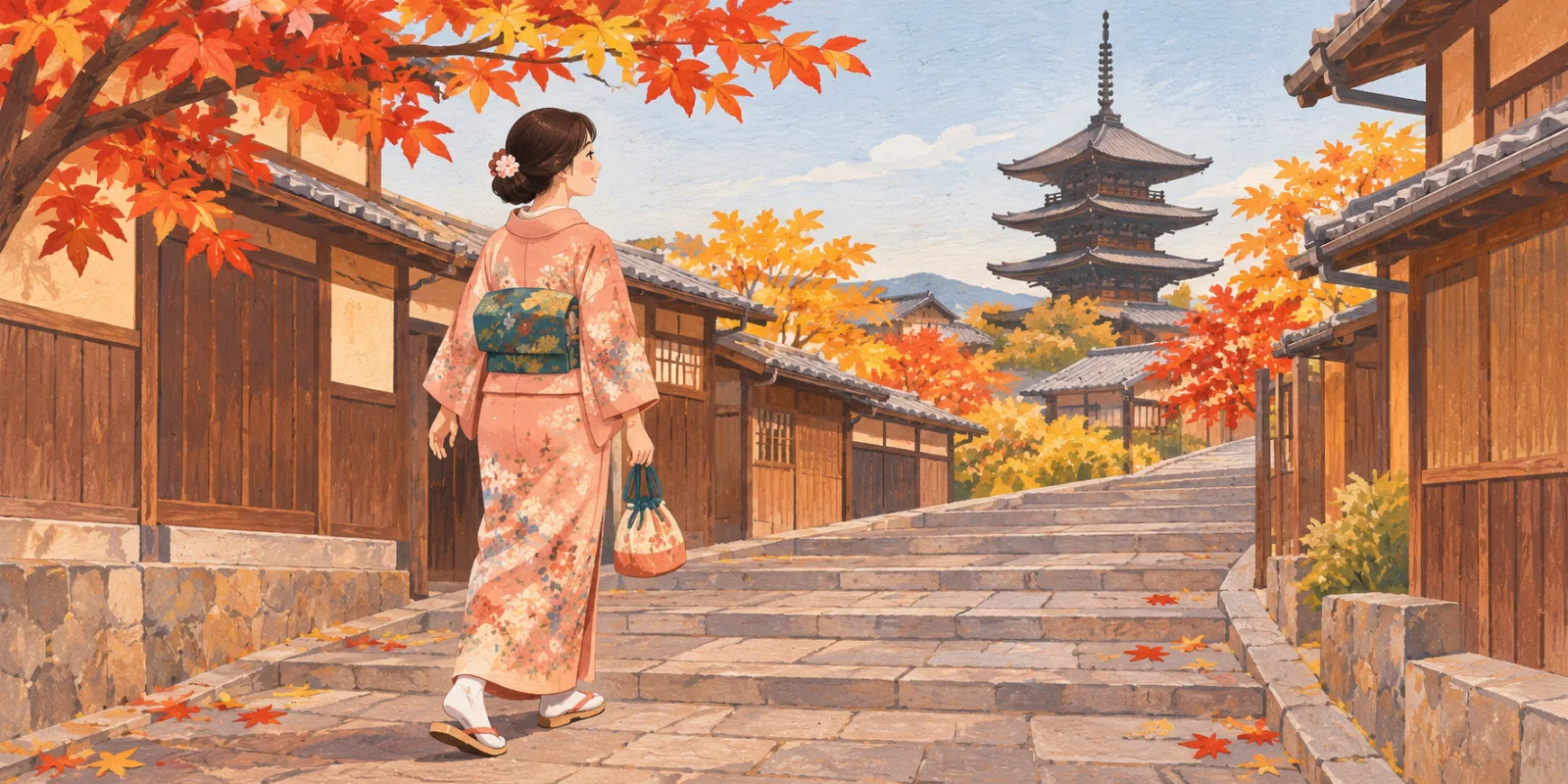
Renting a kimono for a day is one of the most popular things to do in Kyoto and in Tokyo's Asakusa district, and it is easy to arrange: you choose a kimono in the morning, staff dress you in it, and you spend the day walking temples and old streets before returning it in the evening. Plenty of Japanese visitors do the same. Here is what it costs, what you get, and what to know so the day is comfortable. For everyday clothes, see our guide to what to wear in Japan.
In short
- A basic plan in Kyoto usually costs about ¥3,000 to ¥5,000, and includes the kimono, obi sash, tabi socks, sandals and a small bag. Hair styling is usually extra.
- Book online in advance: prices are often lower than at the counter, and popular shops fill up in spring and autumn.
- In summer, most shops offer the lighter cotton yukata instead, which is far more comfortable in the heat.
- Kimono always wrap left side over right on the living. Staff will dress you correctly; it matters if you ever adjust it yourself.
- Basic plan
- ¥3–5k
- With hair
- ¥5–7k
- Summer
- Yukata
- Wrap
- Left over right
How kimono rental works
- Book a plan online, usually for a morning slot. Most shops are close to the main sights, such as Kiyomizu-dera and Gion in Kyoto or Senso-ji in Asakusa.
- Arrive in light, thin clothes. You choose a kimono and an obi sash from the shop's racks; the choice is usually bigger at the start of the day.
- Staff dress you, which takes longer for a full kimono than for a yukata. If you booked hair styling, that comes next.
- Leave your own clothes and bags at the shop, and take only the small bag that comes with the plan.
- Spend the day sightseeing, then return the kimono by the shop's closing time, usually the same evening. Some shops offer a next-day return for an extra fee.
What's included and what it costs
| Plan | Typical price | Usually includes |
|---|---|---|
| Basic kimono | ¥3,000–¥5,000 | Kimono, obi sash, tabi socks, zori sandals, small drawstring bag, dressing |
| Hair styling add-on | ¥500–¥2,750 | A simple up-do with an ornament; more elaborate styles cost more |
| Full plan | ¥5,000–¥7,000 | Basic plan plus hair styling and extra accessories |
| Premium or formal | ¥6,000–¥18,000 | Finer fabrics and patterns, or formal styles such as houmongi |
| Yukata (summer) | ¥3,000–¥5,000 | Cotton yukata, obi, sandals and bag, dressing included |
Online prices are often cheaper than walk-in prices, and some shops discount early bookings. Add-ons such as lace collars, a haori jacket, a parasol or a photographer are charged separately, so read the plan carefully before you choose. Tokyo prices in Asakusa are broadly similar.
Kimono or yukata?
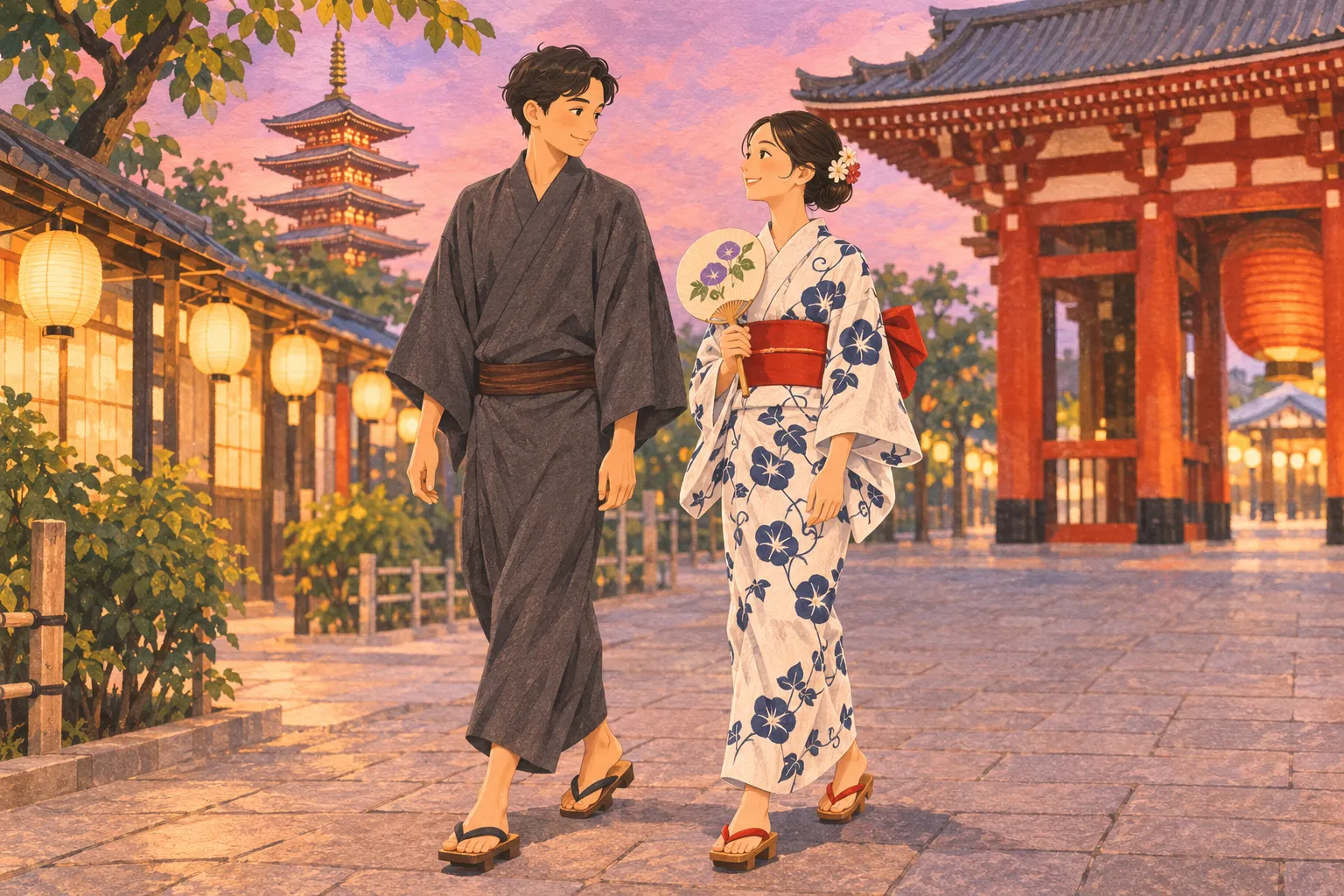
A kimono is layered, with an under-kimono beneath the outer robe, and it is the classic choice for spring, autumn and winter. A yukata is a single layer of cotton, worn over light underwear, and it is the casual summer version you will see at festivals and fireworks. In July and August most rental shops switch to yukata, and you should too: a full kimono in Kyoto's summer heat is very hot. In winter, shops add warmer under-layers and a shawl or haori jacket.
What to wear under a rental kimono
Wear thin, close-fitting clothes that will not show at the neck or sleeves: a camisole or a thin vest top with a low or wide neckline and a pair of thin leggings or shorts work well, and they also protect the rental clothes from sweat. Avoid high-necked tops, thick fabrics and anything with a hood. Wear or bring socks you are happy to change out of, as the shop provides split-toe tabi socks for the sandals. For a kimono, the shop dresses you in its own under-kimono; for a yukata, what you arrive in is what you wear underneath.
Arrive in
What to wear to the shop
- Thin top, low neckline
- Thin leggings or shorts
- Easy shoes
Your own clothes stay at the shop for the day.
The shop provides
What you'll wear
- Kimono and obi
- Tabi socks
- Zori sandals
Hair styling and a haori jacket are usually extras.
Where to rent and where to walk
Kyoto
The Higashiyama area is the classic route: the slopes of Sannenzaka and Ninenzaka up to Kiyomizu-dera, then down past Yasaka Shrine into Gion, all within walking distance and full of rental shops. Arashiyama, with its bamboo grove and riverside, is a good alternative in the west of the city. Both are very busy in spring blossom and autumn leaf season, so start early.
Tokyo
Asakusa is Tokyo's kimono district. Shops cluster around Senso-ji temple, and the temple, the Nakamise shopping street and the old lanes around them make a natural route for the day. Osaka also has rental shops, but most visitors rent in Kyoto or Asakusa, where the setting suits the clothes best.
Left over right: the one rule that matters
A kimono or yukata is always wrapped with the left side over the right on the living. From the wearer's point of view, you fold the right panel across your body first and lay the left panel over it, so the collar forms the shape of a lowercase y when someone looks at you. The reverse, right over left, is how the dead are dressed for burial, and getting it wrong is a real faux pas. The shop's dressers will always do it correctly; it matters if you ever adjust your kimono yourself, or put on the yukata provided in a ryokan.
Tips for a day in kimono
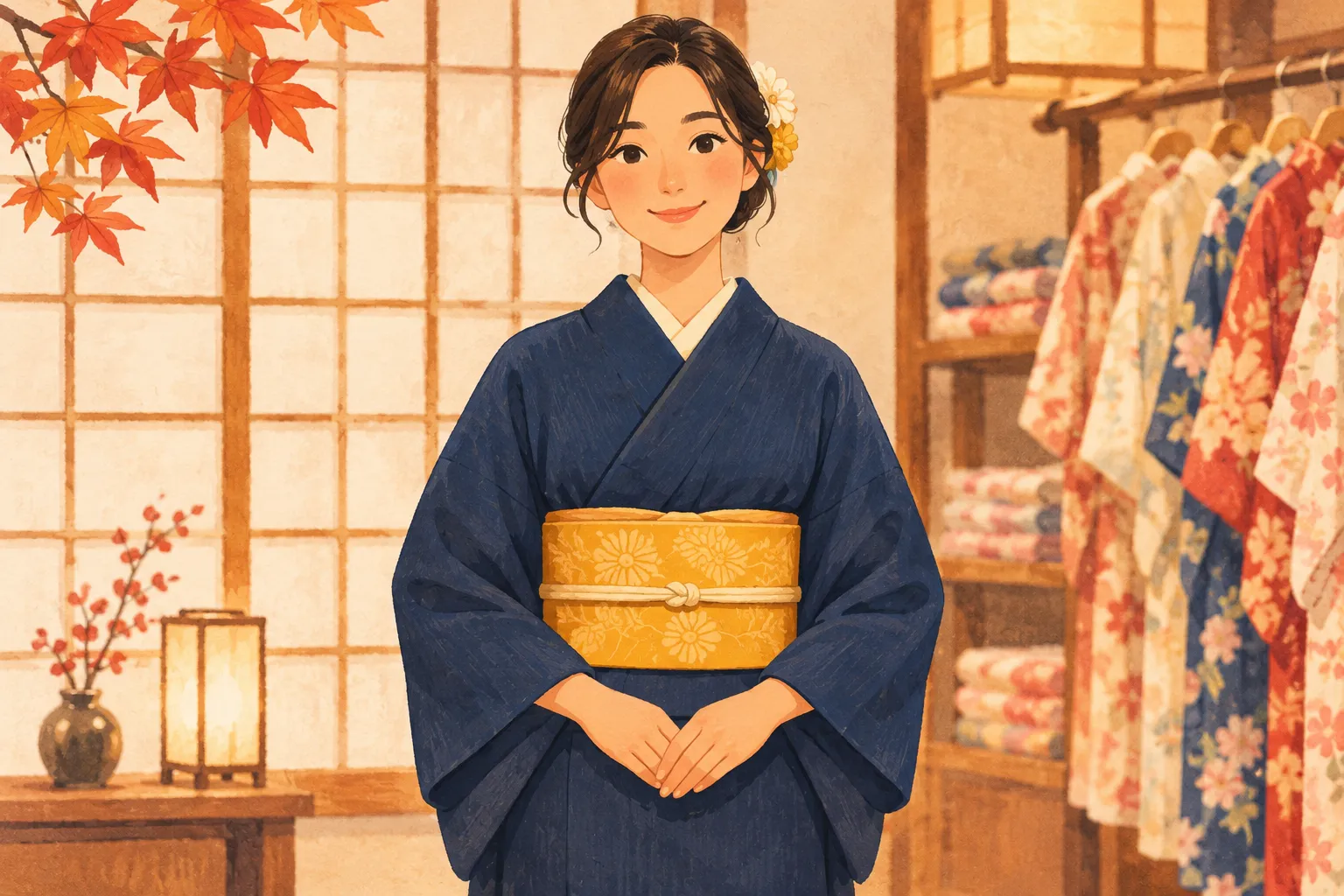
- Take small steps. The kimono is narrow at the hem and zori sandals take getting used to, so leave more time than usual between sights.
- Hold your sleeves when you reach for something, wash your hands or eat, so they do not trail across the table.
- Lift the hem slightly on steps and stairs, and take temple stairs slowly.
- Plan toilet stops: it is easier in a larger, Western-style cubicle, and some people ask staff for a quick tip before leaving the shop.
- Check the weather. Rain can damage the fabric and sandals, and some shops let you change your booking if heavy rain is forecast.
- Note the return time and the shop's location before you set off; late returns can cost extra.
Is it respectful to wear a kimono as a tourist?
Yes, for the vast majority of people in Japan. Kimono rental is a business run by Japanese companies for both Japanese and foreign visitors, and seeing visitors enjoying traditional dress is generally welcomed in Kyoto and Asakusa. Wear it with care: let the dressers put it on properly, keep it clean, and behave as you would at the temples you are visiting.
Kimono rental for men
Every major shop has plans for men, with a darker, simpler kimono and an obi worn lower on the hips, and many offer a hakama, the pleated trousers worn over the kimono, as an upgrade. Couple plans and family plans with children's sizes are common, so it is easy to dress up together.
Frequently asked questions
How much does it cost to rent a kimono in Kyoto?
A basic plan usually costs about ¥3,000 to ¥5,000, with hair styling extra at around ¥500 to ¥2,750. Full plans with hair and accessories cost about ¥5,000 to ¥7,000, and premium or formal kimono more. Booking online is often cheaper.
What is included in a kimono rental?
Usually the kimono, obi sash, tabi socks, zori sandals, a small drawstring bag and dressing by staff. Hair styling, a haori jacket and other accessories are usually extras.
What should I wear under a rental kimono?
Thin, close-fitting clothes with a low or wide neckline, such as a camisole and thin leggings. Avoid high necks and thick fabrics. The shop provides the under-kimono and tabi socks.
Should I rent a kimono or a yukata?
In summer, rent a yukata: it is a single cotton layer and much cooler. In spring, autumn and winter, a kimono is the classic choice, and shops add warmer layers in winter.
Which way does a kimono wrap?
Always left over right on the living: the right panel goes across the body first and the left panel lies on top. Right over left is only used to dress the dead.
Is it disrespectful for a tourist to wear a kimono?
Generally no. Kimono rental is a popular Japanese business used by Japanese and foreign visitors alike. Let the staff dress you properly, take care of the kimono and behave respectfully at temples and shrines.